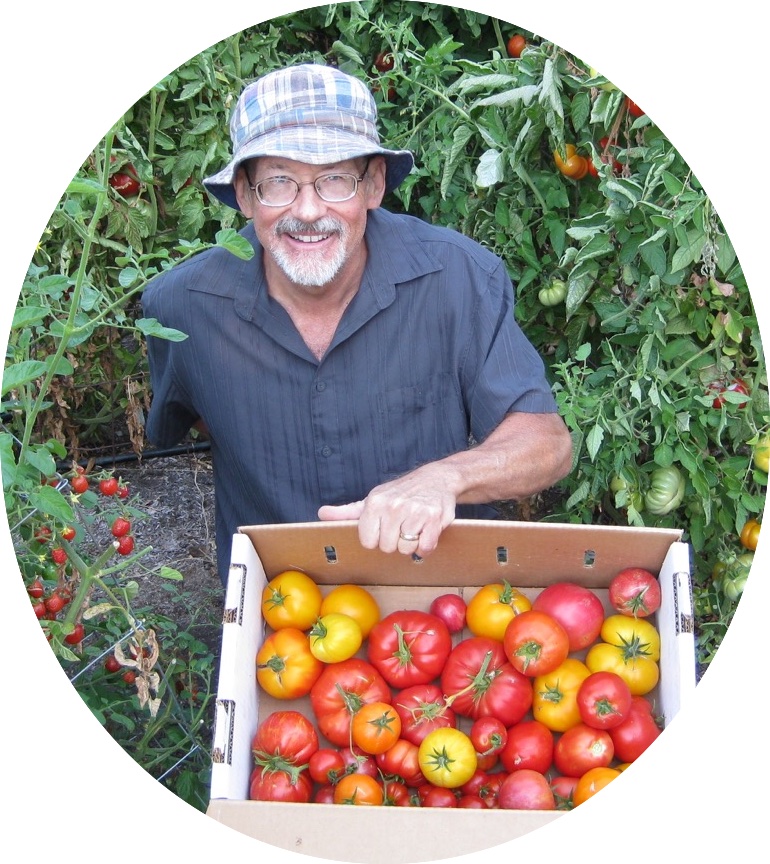
In today’s podcast (above), we talk with renowned pepperhead Dave DeWitt, author of several hot pepper books (https://amzn.to/4ft6DGH) . We talk hot pepper basics, and Dave adds advice on how to overwinter your hot pepper plants for a second year of growth (and heat!). We have a complete, human-corrected transcript of the podcast towards the bottom of today’s newsletter. Short of time? Here are the main points from today’s podcast: * Start from seed for variety, or order early from pepper catalogs. Super-hot varieties like Bhut Jolokia or Scorpion peppers may be difficult to find as transplants, so grow them from seed. * Don’t judge peppers by heat alone. Habaneros hit 80,000–200,000 Scoville units but have a fruity, apricot-like flavor, good for both heat and taste. Diluting them (e.g., one habanero in 4 cups of salsa) keeps flavor without overwhelming heat. * Skip water or beer for pepper burn. Capsaicin isn’t water-soluble, so the relief is temporary and heat returns. Use dairy instead: yogurt, sour cream, heavy cream, whole milk or ice cream (the casein protein strips capsaicin off your mouth). * Never let pepper roots sit in water-logged soil. Add perlite or pumice (not vermiculite) to potting soil/containers to keep roots well-drained and prevent root rot or Phytophthora fungal disease. * Give peppers 10–12 hours of full sun daily. They’re unaffected by day length until fall, and stop flowering once they hit their max fruit load. * Use moderate nitrogen fertilizer. Too much N (especially from urea) produces lots of foliage but few pods. Organic fertilizers (naturally low in salt, under 10% nitrogen) are a safer bet. * Get your soil tested annually (via a University extension service, e.g., Colorado State, UMass/Amherst, Texas A&M, or Utah St) to catch salt buildup, a common yield-killer from repeated watering/fertilizing in raised beds. If salts build up, flood-irrigate the bed heavily at season’s end to flush them out. * To overwinter a pepper plant, grow it in a container, bring it indoors (a south-facing window is enough) over winter, and move it back outside in spring. You’re just keeping it alive in the winter, not expecting fruit until summer returns. * Choose smaller-podded varieties (like pequins (https://en.wikipedia.org/wiki/Pequin_pepper) ) for overwintering success. Pequins retain more vigor in year two, while larger-podded types (like New Mexico chilies) lose vigor and yield less after their first year. What To Do With All Those Peppers This is a public episode. If you'd like to discuss this with other subscribers or get access to bonus episodes, visit gardenbasics.substack.com/subscribe (https://gardenbasics.substack.com/subscribe?utm_medium=podcast&utm_campaign=CTA_2)
 Getting the Soil Ready for Cool Season Plants
In today’s podcast, Sacramento County Master Gardener and vegetable expert Gail
Getting the Soil Ready for Cool Season Plants
In today’s podcast, Sacramento County Master Gardener and vegetable expert Gail
 Cool Season Garden PLANNING Time is Here
In today’s podcast, Master Gardener and vegetable expert Gail Pothour talks abou
Cool Season Garden PLANNING Time is Here
In today’s podcast, Master Gardener and vegetable expert Gail Pothour talks abou
 Pruning Blackberries
In today’s podcast, we talk with Sacramento County Master Gardener Michael Stins
Pruning Blackberries
In today’s podcast, we talk with Sacramento County Master Gardener Michael Stins
 Controlling Puncturevine Weed and Liquidambar Tree Seeds
We tackle two prickly topics: the spiky, caltrop-like seed balls of puncturevine
Controlling Puncturevine Weed and Liquidambar Tree Seeds
We tackle two prickly topics: the spiky, caltrop-like seed balls of puncturevine
Got a question, press inquiry or idea you'd like to share? Contact us through the form below and let us know how we can help.



Comments & Upvotes